How an Emergency Dentist Treats a Dislodged Tooth

A dislodged tooth sits in an awkward middle ground. It has not been completely knocked out, but it is no longer where it belongs. It may be pushed inward, pulled partly out of the socket, shifted sideways, or left feeling loose after a hit to the mouth. Patients often describe it in simple terms: “It moved,” “It feels higher than the others,” or “I can’t bite right anymore.”
For an Emergency Dentist, that description immediately narrows the concern. A dislodged tooth is not just a cosmetic problem. It can involve damage to the periodontal ligament, the socket bone, the pulp inside the tooth, and the surrounding gums. The clock matters, but so does technique. Quick treatment improves the odds that the tooth can be stabilized and kept healthy over time.
The good news is that many dislodged teeth can be saved. The less comforting truth is that even when a tooth looks fine after it is put back in position, it still needs close follow-up. Trauma has a long memory in dentistry. A tooth can appear to recover, then show nerve damage, color changes, or root problems weeks or months later. That is why emergency care is only the first chapter.
What “dislodged” really means
When people hear dental trauma, they often think only of a tooth that has come all the way out. In practice, there are several patterns of displacement, and they do not behave the same way.
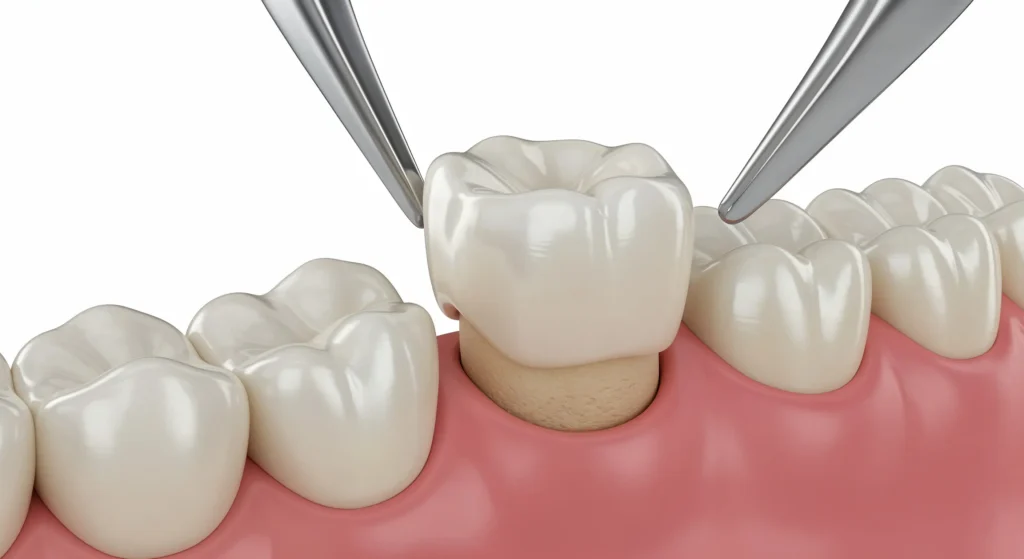
A tooth may be extruded, meaning it has been partially pulled out of the socket and looks longer than the neighboring teeth. It may be laterally luxated, where it is shoved to the side and often feels locked in the wrong position. It may be intruded, meaning it has been driven deeper into the jawbone. It can also be simply loosened without obvious displacement. Each pattern points to a different level of injury and a different treatment approach.
An Emergency Dentist starts by sorting out which of those injuries has happened. That distinction affects whether the tooth can be gently repositioned in the chair, whether splinting is needed, how urgent imaging becomes, and how likely the tooth is to need root canal treatment later.
Age matters too. A child with a growing jaw and developing permanent teeth presents a different situation from an adult with fully formed roots. A baby tooth is handled differently from a permanent tooth. No careful dentist wants to damage a developing permanent tooth bud by treating a primary tooth too aggressively.
The first few minutes matter
The most useful thing a patient or parent can do is protect the area and get to care quickly. People often make the injury worse by poking at the tooth, repeatedly testing whether it is loose, or trying to force it into place without understanding the direction of the displacement.
If a permanent tooth has shifted, the safest short-term approach is usually straightforward:
- Control bleeding with clean gauze or a damp cloth and apply gentle pressure.
- Avoid biting on the injured tooth or forcing the jaws together.
- Use a cold compress on the face to limit swelling.
- Keep the mouth as clean as possible with gentle rinsing, preferably with water or saline.
- Seek an Emergency Dentist promptly, ideally the same day.
That advice sounds basic because it is. In trauma care, simple measures done early are often more helpful than dramatic ones done poorly. I have seen patients arrive within an hour of an injury with a tooth still very salvageable because they left it alone, stayed calm, and came straight in. I have also seen the opposite, where repeated attempts to “wiggle it back” created more inflammation and made repositioning harder.
What happens when you arrive for emergency treatment
The appointment often starts with questions that seem mundane but are clinically important. How did the injury happen. When did it happen. Did the patient lose consciousness. Is the bite different. Is there numbness in the lip or chin. Was there bleeding from the nose. Is the tooth painful on its own, or only when touched. Has there been previous dental work on that tooth.
Those details help the Emergency Dentist judge whether the problem is isolated to the tooth or part of a larger facial injury. A blow strong enough to dislodge a tooth can also crack the root, fracture the jaw, injure the lips, or drive tooth fragments into soft tissue. If there are signs of head injury, altered awareness, severe facial swelling, or suspected jaw fracture, dental treatment may need to happen alongside medical evaluation.
The clinical exam is careful and usually brief at first. The dentist looks at tooth position, mobility, bite contact, gum tears, and any fractures in the crown. They check whether the tooth sounds normal when gently tapped or whether it gives the dull note that suggests it has been displaced into bone. They also assess neighboring teeth, because trauma rarely respects neat boundaries.
Then come radiographs. A standard dental X-ray may be enough in some cases, but additional views are often helpful. With trauma, one image can hide as much as it reveals. A root fracture, socket fracture, or intrusion injury may show up more clearly from a second angle. In selected cases, especially when the injury pattern is complex, a three-dimensional scan may be considered.
Repositioning the tooth
This is the part most patients imagine first, and it is often less dramatic than expected. If the tooth has been pushed sideways or partly out of the socket, the Emergency Dentist will typically numb the area and guide the tooth back into its proper position with controlled pressure. The goal is not force. The goal is accuracy.
A freshly displaced tooth can sometimes be repositioned surprisingly smoothly. The surrounding tissues are injured, but if the socket walls are intact and the tooth has not been out of place for too long, the movement back into alignment may be clean and precise. Patients often feel immediate relief once the bite is restored. That “my teeth fit again” sensation is a good sign, though not a guarantee that the pulp will remain healthy.
The difficult cases are the ones where the tooth is mechanically locked, especially with lateral displacement. In those situations, the tooth may not simply slide back. It may need gentle disengagement from the bony socket before it can be reseated. This takes judgment. Too little pressure leaves it malpositioned. Too much risks additional trauma.
Intruded teeth are a different challenge. When a tooth has been driven deeper into the bone, the treatment depends on the degree of intrusion, the stage of root development, and the patient’s age. Some mildly intruded teeth, especially in younger patients, may be monitored for spontaneous re-eruption. Others need orthodontic or surgical repositioning. That is why “dislodged tooth” can describe injuries with very different management plans.
Why splinting is often part of treatment
Once the tooth is back in position, it may need support while the ligament heals. That support usually comes in the form of a flexible splint attached to neighboring teeth. A flexible splint is preferred because teeth are meant to have a tiny amount of natural movement. Rigid immobilization for too long can create its own problems.
A typical splint may stay in place for a couple of weeks, sometimes longer if the injury is more severe or there is associated bone damage. The exact timing depends on what the dentist found at the exam and on imaging. During that period, the patient is usually told to follow a soft diet, avoid contact sports, and keep the area exceptionally clean.
Splinting sounds simple, but the details matter. The tooth must be held in the right position without interfering too much with the bite. If the splint traps plaque or makes hygiene impossible, gum inflammation can complicate the recovery. If it is too stiff or left on too long, healing may not progress as intended. This is one of those areas where experienced emergency management makes a real difference.
When the nerve inside the tooth survives, and when it does not
One of the hardest parts of treating a dislodged tooth is that the pulp, the soft tissue inside the tooth, may be alive on the day of injury and still fail later. Trauma can stretch or sever the tiny blood vessels that enter through the root tip. The more severe the displacement, the higher the risk that the pulp will not recover.
Immediately after an injury, vitality tests are not always reliable. A traumatized tooth may test “dead” simply because the nerve is stunned. That does not always mean irreversible damage. For this reason, a thoughtful Emergency Dentist documents the https://lukaslgfs190.theburnward.com/top-reasons-people-need-an-emergency-dentist-right-away baseline findings, explains the uncertainty, and schedules follow-up rather than making assumptions too early.
In teeth with fully formed roots, severe displacement injuries carry a meaningful risk of pulp necrosis. If the nerve dies, the tooth may darken, become sensitive to pressure, or develop an abscess. At that point, root canal treatment is commonly recommended to preserve the tooth. In younger patients with immature roots, there is more healing potential, which can sometimes change the outlook.
This is where patient expectations need careful handling. Repositioning the tooth is not the end of care. It is the first step in trying to preserve function and biology. Some teeth settle in and remain healthy. Some need root canal therapy despite excellent emergency treatment. A few develop complications such as root resorption, where the body starts breaking down root structure after the trauma. That possibility is one reason follow-up visits matter so much.
Soft tissue injuries are not secondary details
A dislodged tooth rarely injures only the tooth. The lips, cheeks, and gums often take part of the impact. Cuts may look minor at first and still contain embedded grit, enamel fragments, or even a small piece of tooth. If a front tooth is chipped and the lip is swollen, many dentists will check the lip with imaging if there is any suspicion that a fragment is lodged inside.
Gum tears near the tooth can influence how stable the area feels after repositioning. They also increase the importance of gentle cleaning and, in some cases, antimicrobial rinses. If there is extensive contamination, the dentist may spend nearly as much time on irrigation and soft tissue management as on the tooth itself.
These details are easy for patients to underestimate because the dramatic part is the displaced tooth. From a healing standpoint, though, healthy surrounding tissue helps everything.
Pain control and home care after the visit
Most patients do not describe the pain after treatment as sharp or severe. More often, it is soreness, pressure, and a bruised sensation when chewing. Over-the-counter pain relief is often enough, assuming the patient has no medical reason to avoid it. Cold compresses during the first day can help with swelling.
Food choices matter more than people expect. A soft diet is not just about comfort. It protects the healing ligament and reduces the chance of shifting the tooth again. Yogurt, eggs, pasta, soup that is not too hot, soft rice, fish, smoothies eaten carefully, and cooked vegetables are usually easier than crusty bread, apples, pizza crust, or anything that requires tearing and front-tooth pressure.
Oral hygiene should remain thorough but gentle. A traumatized mouth gets inflamed quickly if plaque accumulates around the splint or along the gumline. Many dentists recommend a soft toothbrush and careful cleaning after meals. If a rinse is prescribed, it should support hygiene, not replace brushing.
Patients also need to know what should trigger a call back. Worsening bite changes, increasing mobility, swelling, persistent throbbing, bad taste, fever, or sudden darkening of the tooth deserve attention. Some changes are expected. Others signal that the pulp or surrounding tissues are not recovering normally.
Cases that look similar but are treated differently
This is where experience shows. Two front teeth may both appear “crooked after being hit,” yet the underlying injuries can be quite different.
A teenage athlete who takes an elbow during basketball may have a laterally displaced front tooth with a clean socket, minimal gum tearing, and quick access to care. That tooth may be repositioned, splinted, and monitored with a fair chance of long-term retention.
An adult who falls on concrete after drinking may present six hours later with a tooth that is extruded, cracked, and surrounded by abraded soft tissue contaminated with grit. The tooth can still sometimes be saved, but the prognosis changes. The risk of pulp death goes up. The chance of hidden root or socket injury rises. The conversation becomes more nuanced.
A younger child who injures a baby tooth presents a different calculation altogether. If a primary tooth is driven into the tissues, aggressive repositioning may be the wrong move because of the permanent tooth developing underneath. In that setting, the Emergency Dentist balances appearance, comfort, infection risk, and protection of the future adult tooth.
Dentistry is full of these judgment calls. The treatment is not only about what can be done, but what should be done for that tooth, in that patient, on that day.
The role of follow-up, which is where long-term success is won
Trauma follow-up is not busywork. It is part of treatment. The first recheck often happens within a couple of weeks, particularly if a splint is in place. The dentist confirms that the tooth remains in position, checks healing of the gums, and reassesses symptoms. Splint removal, when indicated, is done with another review of mobility and bite.
After that, teeth are often monitored over several months and sometimes longer. The dentist may repeat imaging, pulp testing, and clinical evaluation to catch delayed complications. A tooth can remain asymptomatic while changes develop around the root tip. Conversely, a tooth can feel strange early on and then stabilize beautifully. Time clarifies trauma.
Patients are sometimes surprised that a tooth can be saved yet still need esthetic treatment later. A previously injured tooth may discolor. Internal bleaching, bonding, veneers, or other restorative options may be discussed if function is stable and the appearance changes. The emergency phase is about preservation. The refinement comes later.
What affects prognosis most
Timing helps, but it is not the only factor. The direction and force of the injury, root maturity, condition of the socket, presence of fractures, and speed of repositioning all shape the outcome. So does compliance. A patient who returns for follow-up, keeps the area clean, protects the tooth during healing, and reports changes early gives that tooth its best chance.
The most favorable cases are usually those where the tooth is repositioned promptly, stabilized appropriately, and monitored carefully. The less favorable cases are often the ones with severe intrusion, associated root fracture, delayed treatment, or repeated trauma to the same area.
None of that means a bad-looking injury is hopeless. Some teeth recover better than expected. What it means is that a dislodged tooth should be taken seriously from the start. It is not something to “wait and see” for a week.
Why emergency dental care makes a real difference
A displaced tooth is one of those situations where access to an Emergency Dentist changes the story. The right first steps can restore position, protect the ligament, improve comfort, and set up the tooth for the best possible healing. The wrong delay can allow the bite to lock in badly, swelling to increase, and the tissue response to become less forgiving.
Most patients remember the event clearly, the fall, the collision, the missed step on the stairs, the mouthguard that was not being worn that day. What they tend to remember even more, though, is the moment the tooth was put back where it belonged and the panic started to ease. That moment matters. It is not only about appearance. It is the point where emergency care becomes preservation.
A dislodged tooth demands urgency, precision, and follow-through. When those pieces come together, many injured teeth can remain functional for years. That is the outcome both patient and dentist are working toward from the first emergency visit onward.
Simple Dental Vermont
Address: 8914 S Vermont Ave, Los Angeles, CA 90044
Phone number: +13239493000
FAQ About Emergency Dentist Los Angeles CA
What can the ER do for a tooth?
The emergency room can provide temporary symptom relief for a bad tooth, such as prescribing pain medicine or antibiotics, but it cannot fix the actual dental problem.
What is the 3-3-3 rule for tooth infection?
The 3-3-3 rule for a toothache or infection typically means taking three 200 mg ibuprofen tablets (600 mg total) three times a day for no more than three days to control pain and swelling while waiting to see a dentist.
What do you do if you have a dental emergency but no dentist?
If you have a dental emergency and no regular dentist, you should search for an urgent care dental clinic, call local walk-in dental offices, or go to a hospital emergency room if you have severe bleeding, swelling, or trouble breathing.